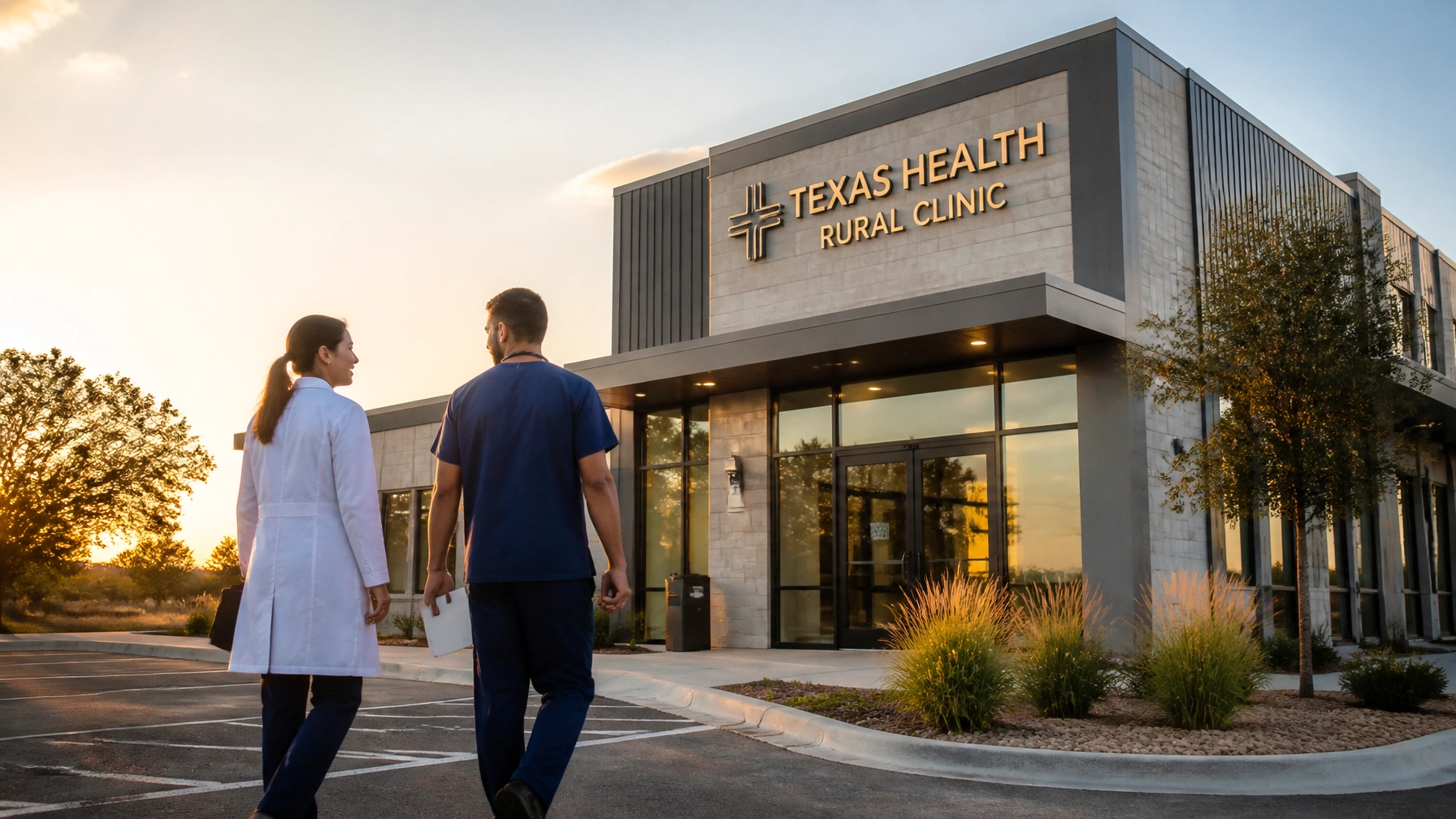
Navigate the complexities of rural healthcare in 2026 with confidence. The landscape is shifting rapidly, but with the right revenue integrity support, your clinic can move from surviving to thriving. Between new federal funding lifelines and major shifts in coding standards, staying ahead isn't just about compliance: it’s about sustainability.
Advance your mission by understanding these 10 critical pillars of rural health stability.
1. Secure the $60M RHTP Funding Lifeline
Governor Abbott recently announced an initial $60 million in federal funding as part of the Rural Health Transformation Program (RHTP). This is part of a larger $1.4 billion investment over five years designed to "Make Rural Texans Healthy Again." For rural hospital districts and clinics, this isn't just a grant; it’s a foundational shift. These funds are designated for community-based prevention, wellness, and nutrition programs. If your clinic isn't positioned to absorb and report on these funds accurately, you’re leaving vital resources on the table.
2. Optimize for the $165 AIR Cap
As of January 1, 2026, the statutory payment limit for independent RHCs and provider-based RHCs in hospitals with over 50 beds has reached $165 per visit. To maximize your reimbursement, your cost per visit must meet or exceed this cap. Many clinics inadvertently lower their All-Inclusive Rate (AIR) by under-reporting allowable costs like EHR maintenance, medical supplies, and non-provider clinical staff time. Revenue integrity support ensures every dollar spent on care is reflected in your cost reporting.
3. Hire "Compliance Translators," Not Just Auditors
Stop thinking of compliance as a "gotcha" department. At Leave the Billing to Us Foundation, we’ve rebranded the role of the auditor to the Compliance Translator. Why? Because a rural clinic needs a team that can translate complex federal regulations into actionable clinical workflows. Compliance Translators bridge the gap between the provider's documentation and the payer's requirements, ensuring that your technical shield remains impenetrable.

4. Master V28 Revenue Integrity and RAF Scores
The shift to V28 Revenue Integrity standards is non-negotiable. This version focuses heavily on the accuracy of Risk Adjustment Factor (RAF) scores. In rural settings, where patient populations often have high chronic disease burdens, capturing the true complexity of care is essential. Accurate RAF scoring directly impacts your reimbursement levels and your ability to demonstrate the high-intensity care your clinic provides daily.
5. Implement "Financial Nutrition" for Revenue Protection
We use the term Financial Nutrition to describe the proactive protection of a clinic’s revenue. Just as physical nutrition prevents disease, financial nutrition prevents "revenue leakage." This involves shielding your partner organization from compliance vulnerabilities by ensuring that your front-end staff are experts in insurance discovery and eligibility verification.
6. Deploy a "Technical Shield" Against Audit Risk
The Technical Shield is your clinic’s defense against financial vulnerabilities and audit recoupments. By implementing AHIMA-approved coding standards and utilizing our $320k SME (Subject Matter Expert) faculty load, clinics can absorb audit risk before it hits the bottom line. This level of expertise is typically out of reach for small rural clinics, but through a foundation partnership, it becomes your greatest asset.

7. Navigate the Dissolution of G0511
The dissolution of the bundled G0511 code has changed everything for RHC care management. You must now transition to specific CPT codes for Advanced Primary Care Management (APCM) and Behavioral Health Integration (GPCM). This shift allows for billing based on patient complexity rather than just minutes spent. If your billing team is still stuck in the "old way," you are missing out on significant, legitimate revenue that recognizes the intensity of rural chronic care.
8. Build a Talent Pipeline with MCAP
Sustainability requires a steady stream of skilled professionals. Our Medical Coding Apprenticeship Program (MCAP) trains local residents for sustainable careers in medical coding and revenue integrity. By partnering with a program that actively develops the next generation of healthcare advocates, your clinic helps solve the rural workforce shortage while ensuring your coding remains top-tier.
9. Combat Medicaid Churn with Insurance Discovery
Texas continues to face high levels of Medicaid eligibility churn. Many patients classified as "self-pay" or "uninsured" actually have coverage that hasn't been identified. Our patient advocacy and charity screening services act as a safety net. We use sophisticated insurance discovery tools to find coverage, reducing your uncompensated care and protecting the patient from unnecessary debt.

10. Scale Responsibly through SME Leadership
Scaling a rural clinic’s revenue cycle shouldn't mean increasing administrative headaches. By leveraging external SME-level support, you can improve claims processing efficiency without the overhead of hiring multiple full-time executives. Focus on your patients; let the credentialed experts handle the documentation integrity.
Take Immediate Action
Join the movement to stabilize rural healthcare in Texas. Whether you need a full revenue integrity overhaul or support with your 2027 CMS Navigator Consortium application, we are here to help.
If you’re not the decision-maker, could you forward this (and loop me in) to whoever owns compliance/documentation integrity at your organization?
Contact Us
Ready to build your technical shield? Contact Rachel (Receptionist) first to initiate your inquiry. We are dedicated to providing free support to patients while empowering our clinic partners.
- Email: leavethebillingtousfoundation@gmail.com
- Get Involved: Join our movement here
Manager Availability (Last Point of Contact):
- Monday: 8:00 AM – 12:00 PM CST
- Tuesday – Thursday: 8:00 AM – 9:00 AM & 3:00 PM – 6:00 PM CST
- Friday – Saturday: 8:00 AM – 12:00 PM CST
Leave a Reply