• The Ultimate Guide to Medical Billing Advocacy: Everything You Need to Fight High Costs

    Navigate the nightmare of medical billing with confidence. For most families, receiving a thick envelope from a hospital isn't just stressful, it’s a financial emergency. The healthcare system is notoriously opaque, often leaving patients to settle balances they don’t actually owe.

    At the Leave the Billing to Us Foundation, we act as your Compliance Translators. We bridge the gap between complex medical coding and your household budget. By advancing healthcare literacy and eliminating predatory billing practices, we serve as a vital safety net for the Houston community and beyond. Whether you are facing a surprise ER bill or managing chronic care costs, this guide provides the technical shield you need to protect your finances.

    Pillar 1: Audit Your Itemized Bill

    Stop paying "balance forward" statements immediately. Hospitals frequently send summary bills that lack the detail required for a proper audit. You cannot verify charges without seeing the specific CPT (Current Procedural Terminology) and HCPCS codes associated with your care.

    Demand the Details

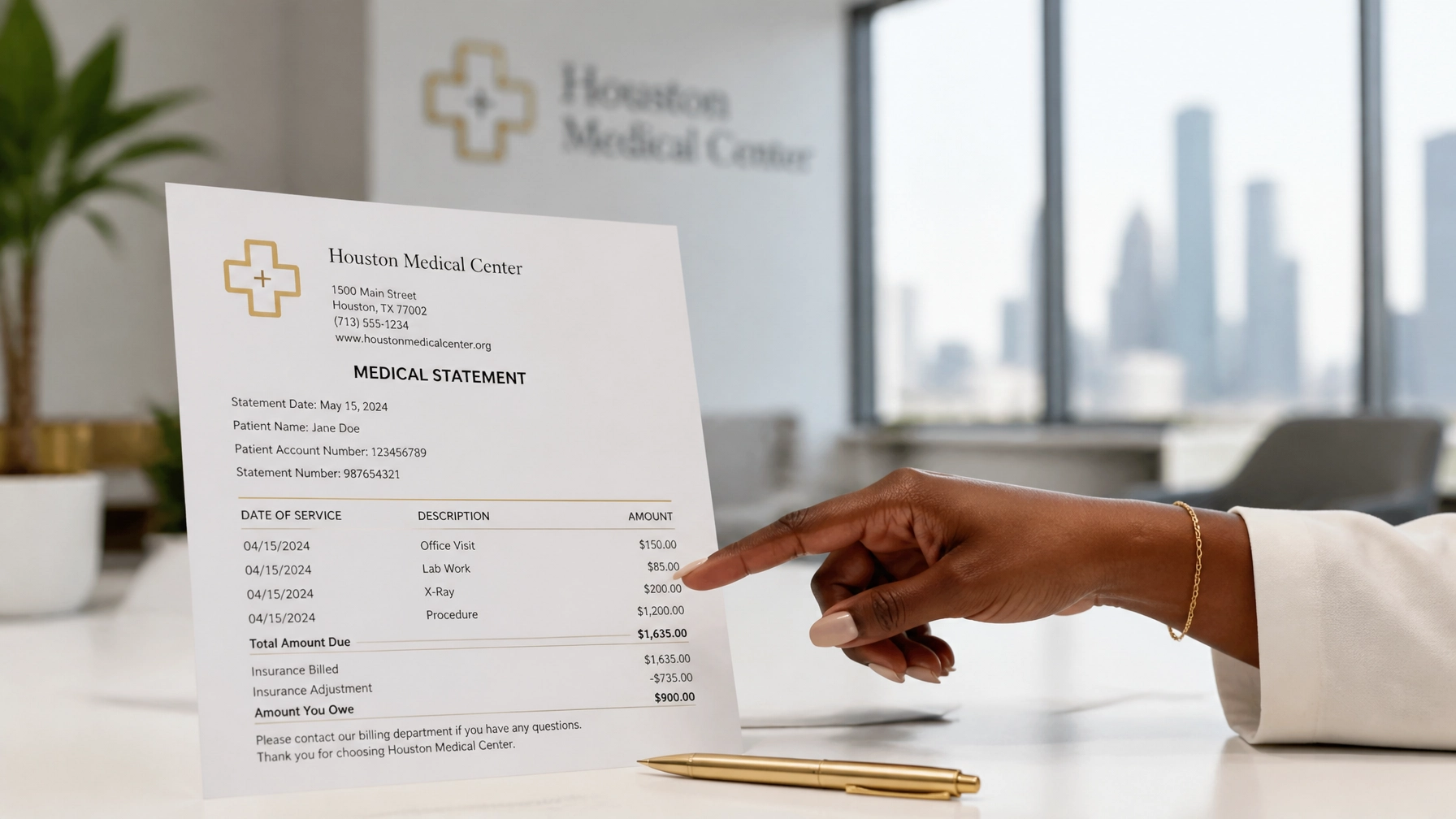
    Request a full itemized statement from the provider’s billing department. This is your right under federal transparency guidelines. Once you have the document, look for the following "red flags" that our credentialed experts (CPC, CRC, SME) frequently identify:

    • Duplicate Charges: Look for the same procedure code listed twice on the same date of service.
    • Upcoding: This occurs when a provider bills for a more complex (and expensive) level of care than was actually provided.
    • Unbundled Services: Providers may charge separately for supplies or services that should be included in a single "package" rate for a procedure.
    • Canceled Services: Ensure you aren't being charged for tests or medications that were ordered but ultimately declined or canceled during your stay.

    By utilizing our $320k SME faculty load, we train advocates to spot these discrepancies with surgical precision, ensuring that "Financial Nutrition" is restored to your bank account.

    ![A close-up, high-quality photo of a hand using a sophisticated gold pen to highlight a line item on a medical billing document. The document is clear and modern. The background is a clean, white minimalist desk with a soft drop shadow.](https://image.pollinations.ai/prompt/A%20close-up%2C%20high-quality%20photo%20of%20a%20hand%20using%20a%20sophisticated%20gold%20pen%20to%20highlight%20a%20line%20item%20on%20a%20medical%20billing%20document.%20The%20document%20is%20clear%20and%20modern.%20The%20background%20is%20a%20clean%2C%20white%20minimalist%20desk%20with%20a%20soft%20drop%20shadow.%20The%20aesthetic%20is%20polished%20and%20professional. [aspectRatio: 16:9])

    Pillar 2: Master Insurance Navigation

    Your Explanation of Benefits (EOB) is your most powerful weapon. This document is not a bill; it is a report card from your insurance company explaining what they covered and why.

    Sync Your Statements

    Compare your itemized bill directly against your EOB. If your insurance company denied a claim, the EOB will provide a reason code. Common issues include:

    • Missing Information: A simple typo in your subscriber ID can trigger a full denial.
    • Medical Necessity: Insurers may claim a service wasn't "necessary." This often requires a clinical appeal, which our team manages as part of our patient advocacy services.
    • Out-of-Network Surprises: Even at in-network hospitals, certain providers (like anesthesiologists) may be out-of-network. The No Surprises Act provides protections here, but you must know how to invoke them.

    Our work as a CMS-designated CDO (Certified Application Counselor Designated Organization) allows us to help families navigate these insurance hurdles, improving claims processing efficiency and protecting you from administrative errors.

    Pillar 3: Activate the Technical Shield

    Medical debt prevention is a proactive movement. You shouldn't wait until a bill is in collections to seek help. We implement a Technical Shield for our community by offering proactive guidance before the debt even occurs.

    Financial Nutrition and Revenue Integrity

    We view your financial health as "Financial Nutrition." Just as you monitor your physical health, you must protect your revenue from being drained by inaccurate billing.

    • Charity Care Screening: Many hospitals, including partners like The Hospitals of Providence and Harris Health System, have mandatory financial assistance programs. If your income falls within certain limits, your bill could be reduced by 50% to 100%.
    • V28 Revenue Integrity: We apply the same rigorous standards used in the V28 Revenue Integrity model to ensure your personal medical "claims" are processed with the highest level of accuracy, protecting your RAF scores (Risk Adjustment Factor) and ensuring your medical history is documented correctly for future coverage.

    A realistic photograph of a diverse group of Houston community members attending a healthcare literacy workshop. A professional instructor is presenting on a clean white board with a gold-trimmed frame. The setting is a bright, modern community center.

    Pillar 4: Training the Next Generation

    Our impact extends beyond individual bills. Through the Medical Coding Apprenticeship Program (MCAP), we are training Houston residents for sustainable careers in revenue integrity. This program turns community members into experts who understand the "how" and "why" behind the numbers.

    Advancing Careers, Eliminating Debt

    By training specialists in AHIMA-approved settings, we ensure that the local healthcare workforce is equipped to handle the 2027 CMS Navigator Consortium requirements. These apprentices become the front line in our movement to fix the billing system from the inside out. They learn to manage uncompensated care reporting and support clinics in maintaining high standards of documentation integrity.

    Take Action Today

    Medical billing doesn't have to be a mystery. You have the right to accuracy, transparency, and advocacy. Whether you need a one-on-one review of a confusing bill or want to join our Medical Coding Apprenticeship Program, we are here to support you.

    If you’re not the decision-maker, could you forward this (and loop me in) to whoever owns compliance/documentation integrity at your organization?

    Contact Us

    Join the movement to eliminate medical debt. Reach out to our team to start your journey toward financial clarity.

    • First Point of Contact: Please reach out to Rachel (Receptionist) for all initial inquiries, document submissions, and general questions.
    • Email: leavethebillingtousfoundation@gmail.com
    • Manager Consultations: For complex case escalations or professional partnerships, the Manager is available during the following hours:
      • Monday: 8 AM – 12 PM CST
      • Tuesday – Thursday: 8 AM – 9 AM and 3 PM – 6 PM CST
      • Friday – Saturday: 8 AM – 12 PM CST

    A professional and warm photograph of a receptionist, Rachel, sitting at a clean, white minimalist front desk in a medical office. She is looking towards the camera with a helpful and welcoming smile.

    Join | Donate | Partner

  • The Clinic’s Guide to Revenue Integrity at Rural Facilities

    Secure the future of rural healthcare by mastering the intersection of clinical excellence and financial compliance. In the current landscape, rural health clinics (RHCs) are facing a dual challenge: increasing operational costs and the complex transition to the V28 Medicare Risk Adjustment model.

    Fortunately, a $60 million federal funding lifeline: the Rural Health Transformation Program (RHTP): is now available to help Texas providers bridge the gap. At the Leave the Billing to Us Foundation, we serve as your Compliance Translators, providing the technical shield necessary to turn these financial challenges into sustainable growth.

    Eliminate Revenue Leakage with V28 Revenue Integrity

    Stop viewing coding as a back-office chore and start seeing it as Financial Nutrition. For rural facilities, every undocumented Hierarchical Condition Category (HCC) is a missed opportunity to reflect the true complexity of the care provided. Under the new V28 model, CMS has shifted the weights and definitions of chronic conditions, meaning that documentation that worked in 2023 could lead to a significant drop in your RAF scores (Risk Adjustment Factor) today.

    Our approach moves beyond simple auditing. We act as your technical partner to:

    • Audit for Accuracy: We identify documentation gaps that lead to revenue leakage.
    • Optimize RAF Scores: By ensuring every chronic condition is captured with precision, we help clinics secure the reimbursement they deserve.
    • Absorb Audit Risk: Our credentialed experts (CPC, CRC, SME) provide the compliance layer that protects your facility from federal clawbacks.

    Map of Texas highlighting the locations of 299 rural health clinics, distinguishing between 180 provider-based and 119 independent sites.

    Deploy the Technical Shield: Why Compliance Translators Matter

    Rural clinics often lack the specialized resources to keep up with the rapid-fire changes in CMS regulations. This is where the technical shield becomes vital. As a CMS-designated CDO and AHIMA-approved CEU provider, our foundation integrates a $320k SME faculty load into our operational narrative. This isn't just an administrative cost; it's the engine that drives our Healthcare Equity & Compliance Initiative (HECI).

    We don't just tell you what's wrong; we translate complex federal mandates into actionable workflows. Whether it's navigating the 2027 CMS Navigator Consortium requirements or preparing for the LEAD Model (Long-term Enhanced ACO Design), our team ensures your clinic remains a "lead agency" in your community’s health.

    Leverage the $60M RHTP Funding Lifeline

    Texas Governor Greg Abbott and the HHSC have opened a critical window for rural health systems. This $60 million injection is specifically designed to support:

    1. Prevention and Wellness Programs: Funding for exercise and nutrition classes.
    2. Chronic Disease Management: Low- or no-cost programs for diabetes and hypertension.
    3. After-Hours Clinics: Improving access to primary care outside standard business hours.

    To access these funds, your facility needs more than just a plan; you need a robust documentation strategy. Our Compliance Translators help you build the "Workflow Excellence" bundles required to prove the impact of these programs to federal grantors.

    Screenshot of the Medicare Physician Bonus Payment Eligibility Analyzer, displaying input fields for street address and city.

    Build the Next Generation with the MCAP Program

    The rural healthcare workforce crisis is real. Many clinics struggle to find and retain qualified medical coders. Our Medical Coding Apprenticeship Program (MCAP) solves this by training local residents for sustainable careers in revenue integrity.

    By partnering with the Leave the Billing to Us Foundation, your clinic can become a placement site for these apprentices. This creates a circular economy of care:

    • Residents gain high-level technical skills.
    • Clinics gain a pipeline of trained professionals who understand V28 and RAF scores.
    • Communities gain economic stability and improved healthcare literacy.

    Impact and Outcomes: The SME Edge

    Our work is measured by the stability we bring to our partners. We focus on claims processing efficiency and reducing the time your staff spends on billing disputes. By offloading the "nightmare" of medical billing to our Medical Debt Advocacy & Patient Resolution (MDAPR) program, you allow your clinical team to focus entirely on the patient.

    A professional woman in business attire representing the credentialed expert team at the Foundation.

    Join the Movement for Rural Health Equity

    The path to financial sustainability in rural healthcare requires a shift from reactive billing to proactive Revenue Integrity. We invite you to be part of the solution.

    If you’re not the decision-maker, could you forward this (and loop me in) to whoever owns compliance/documentation integrity at your facility?

    Immediate Next Steps:

    1. Contact Rachel: Reach out to our receptionist, Rachel, at leavethebillingtousfoundation@gmail.com to request your Partnership Readiness Assessment.
    2. Schedule with the Manager: For serious prospects or confirmed appointments, the Manager is available during the following hours:
      • Monday: 8 AM – 12 PM CST
      • Tuesday–Thursday: 8 AM – 9 AM and 3 PM – 6 PM CST
      • Friday–Saturday: 8 AM – 12 PM CST

    Partner with us today. Eliminate documentation gaps. Advance your clinic’s mission with the technical shield it deserves.

    Modern medical office building with large glass windows and professional landscaping, representing the supportive healthcare facilities where the foundation works.

  • How to Get Expert Help with Medical Bills Without Spending a Dime

    How to Get Expert Help with Medical Bills Without Spending a Dime

    Eliminate the stress of medical debt today. Stop staring at that stack of "Final Notice" envelopes and start taking action. For most families, a single hospital stay can feel like a financial death sentence. It shouldn't be that way. Medical billing in the United States is a systemic crisis, often driven more by technical coding errors than actual care costs.

    At the Leave the Billing to Us Foundation, we believe that healthcare is a right, but navigating the billing nightmare requires a professional technical shield. We are a 501(c)(3) nonprofit dedicated to advancing patient advocacy and eliminating medical billing barriers for everyone, especially those in our underserved Houston communities. Whether you are facing a $500 surprise bill or a $50,000 legacy debt, you don’t have to fight it alone.

    Stop the Bleed: Use a Technical Shield

    Most people try to fight medical bills by calling the hospital’s customer service line. This is a mistake. The person on the other end is trained to collect, not to audit. You need Compliance Translators.

    Our team doesn't just "ask for a discount." We deploy a technical shield of AHIMA-approved experts, including Certified Professional Coders (CPC) and Certified Risk Adjustment Coders (CRC). We look at your bill through the lens of V28 Revenue Integrity.

    What does that mean for you? It means we audit your itemized statements for "upcoding" or duplicate charges that artificially inflate your costs. We understand how RAF scores (Risk Adjustment Factor) and claims processing efficiency impact what you are being charged. By acting as your Compliance Translators, we bridge the gap between complex hospital algorithms and your bank account.

    A professional medical coder in a clean Houston office auditing complex billing data to ensure accuracy and revenue integrity.

    Master Your "Financial Nutrition"

    We often talk about physical health, but at Leave the Billing to Us Foundation, we focus on your Financial Nutrition. This is the proactive protection of your family's revenue and the absorption of financial risk.

    Our Medical Debt Prevention program is designed to help you avoid the debt trap before it even snaps shut. We provide:

    • Charity Care Screening: Many hospitals are legally required to provide "charity care" or financial assistance to families under certain income thresholds. We navigate these applications for you.
    • Insurance Navigation: As a CMS-designated CDO, we help you find and enroll in plans that actually cover your needs, preventing surprise out-of-network disasters.
    • MDAPR (Medical Debt Advocacy & Patient Resolution): We step in to dispute inaccurate bills and negotiate settlements that reflect the fair market value of the services rendered.

    Our goal is simple: we want to reach $5M in mitigated debt by 2028. Every dollar we save a patient is a dollar that stays in our community to pay for rent, food, and education.

    Advance Your Career through MCAP

    Eliminating medical debt isn't just about fighting old bills; it's about building a sustainable future. This is why we created the Medical Coding Apprenticeship Program (MCAP).

    We aren't just advocates; we are a workforce engine. MCAP trains local residents for sustainable careers in medical coding and revenue integrity. By supporting our $320k SME faculty load, we ensure that our apprentices are learning from the best in the business.

    These apprentices don't just learn to code; they learn to protect. They become the next generation of Compliance Translators who will work in clinics and hospitals to ensure billing is fair and documentation is accurate from the start. This improves claims processing efficiency across the entire healthcare system, reducing the "friction" that causes medical debt in the first place.

    A group of diverse professional medical coding apprentices (MCAP) training in a modern classroom to become the next generation of healthcare advocates.

    Join the Movement: Free Community Education

    Knowledge is your best defense. We host regular workshops across Houston to improve healthcare literacy. We’ve seen firsthand how a little bit of technical knowledge can save a family thousands of dollars.

    In these sessions, we teach you how to:

    1. Request an Itemized Bill: Never pay a "summary" bill.
    2. Decode Your EOB: Understand what your insurance actually paid versus what you are being asked to pay.
    3. Identify "Leveling" Errors: Spot when a simple clinic visit is billed as an emergency room high-acuity charge.

    If you can't make it to a workshop, there are several incredible external resources available to help you right now:

    • Dollar For: A nonprofit that helps patients apply for hospital financial assistance.
    • Patient Advocate Foundation (PAF): Provides case management and financial assistance to patients with chronic or life-threatening diseases.
    • 211.org: Connects you with local resources for medical billing and financial aid.
    • HRSA Find a Health Center: Locate Federally Qualified Health Centers (FQHCs) that offer sliding-scale fees based on your income.

    Engaged community members taking notes during a healthcare literacy workshop in a bright, modern Houston community center.

    Our Commitment to Houston Clinics

    We aren't just here for the patients; we are here to support our healthcare partners. Through our Healthcare Equity & Compliance Initiative (HECI), we provide subsidized audit-proofing and documentation coaching for independent and minority-led clinics.

    We act as a technical shield for these organizations, protecting them from financial vulnerabilities while ensuring their patients receive the advocacy they deserve. By focusing on V28 Revenue Integrity, we help clinics stay financially healthy so they can continue serving our community.

    Our partnerships with local sites like the Quentin Mease Health Center and the Baytown Health Center allow us to meet patients exactly where they are.

    The exterior of a clean, modern Houston healthcare facility where Leave the Billing to Us Foundation provides on-site patient advocacy.

    Take Immediate Action

    Don't wait for a collection agency to call. You have the right to expert help, and at Leave the Billing to Us Foundation, that help is completely free for patients.

    If you’re not the decision-maker, could you forward this (and loop me in) to whoever owns compliance/documentation integrity at your organization? We are looking for partners to join our 2027 CMS Navigator Consortium to further expand our impact.

    How to Reach Us

    For all initial inquiries, please contact Rachel, our primary point of contact. She will guide you through the intake process and ensure your case is handled with the urgency it deserves.

    Schedule a Consultation

    If you have a complex case or are looking for a strategic partnership, the Manager is available for confirmed appointments during the following hours:

    • Monday: 8 AM – 12 PM CST
    • Tuesday – Thursday: 8 AM – 9 AM and 3 PM – 6 PM CST
    • Friday – Saturday: 8 AM – 12 PM CST

    A close-up shot of an advocate's hands highlighting errors on a medical bill, symbolizing the precision of our technical audit process.

    Be part of the solution. Help us reach our goal of eliminating $5M in medical debt. Whether you need help, want to donate, or want to join the MCAP movement, your participation matters.

    Advancing patient advocacy. Eliminating medical debt. Together.

  • Looking For Revenue Integrity Support? 10 Things Your Rural Clinic Needs to Know About Sustainability

    Looking For Revenue Integrity Support? 10 Things Your Rural Clinic Needs to Know About Sustainability

    Navigate the complexities of rural healthcare in 2026 with confidence. The landscape is shifting rapidly, but with the right revenue integrity support, your clinic can move from surviving to thriving. Between new federal funding lifelines and major shifts in coding standards, staying ahead isn't just about compliance: it’s about sustainability.

    Advance your mission by understanding these 10 critical pillars of rural health stability.

    1. Secure the $60M RHTP Funding Lifeline

    Governor Abbott recently announced an initial $60 million in federal funding as part of the Rural Health Transformation Program (RHTP). This is part of a larger $1.4 billion investment over five years designed to "Make Rural Texans Healthy Again." For rural hospital districts and clinics, this isn't just a grant; it’s a foundational shift. These funds are designated for community-based prevention, wellness, and nutrition programs. If your clinic isn't positioned to absorb and report on these funds accurately, you’re leaving vital resources on the table.

    2. Optimize for the $165 AIR Cap

    As of January 1, 2026, the statutory payment limit for independent RHCs and provider-based RHCs in hospitals with over 50 beds has reached $165 per visit. To maximize your reimbursement, your cost per visit must meet or exceed this cap. Many clinics inadvertently lower their All-Inclusive Rate (AIR) by under-reporting allowable costs like EHR maintenance, medical supplies, and non-provider clinical staff time. Revenue integrity support ensures every dollar spent on care is reflected in your cost reporting.

    3. Hire "Compliance Translators," Not Just Auditors

    Stop thinking of compliance as a "gotcha" department. At Leave the Billing to Us Foundation, we’ve rebranded the role of the auditor to the Compliance Translator. Why? Because a rural clinic needs a team that can translate complex federal regulations into actionable clinical workflows. Compliance Translators bridge the gap between the provider's documentation and the payer's requirements, ensuring that your technical shield remains impenetrable.

    Professional Compliance Translator working in a modern Houston office

    4. Master V28 Revenue Integrity and RAF Scores

    The shift to V28 Revenue Integrity standards is non-negotiable. This version focuses heavily on the accuracy of Risk Adjustment Factor (RAF) scores. In rural settings, where patient populations often have high chronic disease burdens, capturing the true complexity of care is essential. Accurate RAF scoring directly impacts your reimbursement levels and your ability to demonstrate the high-intensity care your clinic provides daily.

    5. Implement "Financial Nutrition" for Revenue Protection

    We use the term Financial Nutrition to describe the proactive protection of a clinic’s revenue. Just as physical nutrition prevents disease, financial nutrition prevents "revenue leakage." This involves shielding your partner organization from compliance vulnerabilities by ensuring that your front-end staff are experts in insurance discovery and eligibility verification.

    6. Deploy a "Technical Shield" Against Audit Risk

    The Technical Shield is your clinic’s defense against financial vulnerabilities and audit recoupments. By implementing AHIMA-approved coding standards and utilizing our $320k SME (Subject Matter Expert) faculty load, clinics can absorb audit risk before it hits the bottom line. This level of expertise is typically out of reach for small rural clinics, but through a foundation partnership, it becomes your greatest asset.

    Medical coding documents with a gold pen on a clean desk

    7. Navigate the Dissolution of G0511

    The dissolution of the bundled G0511 code has changed everything for RHC care management. You must now transition to specific CPT codes for Advanced Primary Care Management (APCM) and Behavioral Health Integration (GPCM). This shift allows for billing based on patient complexity rather than just minutes spent. If your billing team is still stuck in the "old way," you are missing out on significant, legitimate revenue that recognizes the intensity of rural chronic care.

    8. Build a Talent Pipeline with MCAP

    Sustainability requires a steady stream of skilled professionals. Our Medical Coding Apprenticeship Program (MCAP) trains local residents for sustainable careers in medical coding and revenue integrity. By partnering with a program that actively develops the next generation of healthcare advocates, your clinic helps solve the rural workforce shortage while ensuring your coding remains top-tier.

    9. Combat Medicaid Churn with Insurance Discovery

    Texas continues to face high levels of Medicaid eligibility churn. Many patients classified as "self-pay" or "uninsured" actually have coverage that hasn't been identified. Our patient advocacy and charity screening services act as a safety net. We use sophisticated insurance discovery tools to find coverage, reducing your uncompensated care and protecting the patient from unnecessary debt.

    Community outreach event in rural Texas for patient advocacy

    10. Scale Responsibly through SME Leadership

    Scaling a rural clinic’s revenue cycle shouldn't mean increasing administrative headaches. By leveraging external SME-level support, you can improve claims processing efficiency without the overhead of hiring multiple full-time executives. Focus on your patients; let the credentialed experts handle the documentation integrity.

    Take Immediate Action

    Join the movement to stabilize rural healthcare in Texas. Whether you need a full revenue integrity overhaul or support with your 2027 CMS Navigator Consortium application, we are here to help.

    If you’re not the decision-maker, could you forward this (and loop me in) to whoever owns compliance/documentation integrity at your organization?

    Contact Us

    Ready to build your technical shield? Contact Rachel (Receptionist) first to initiate your inquiry. We are dedicated to providing free support to patients while empowering our clinic partners.

    Manager Availability (Last Point of Contact):

    • Monday: 8:00 AM – 12:00 PM CST
    • Tuesday – Thursday: 8:00 AM – 9:00 AM & 3:00 PM – 6:00 PM CST
    • Friday – Saturday: 8:00 AM – 12:00 PM CST

  • Medical Coding 101: A Beginner’s Guide to Launching Your Career with MCAP

    Medical Coding 101: A Beginner’s Guide to Launching Your Career with MCAP

    Ever looked at a medical bill and thought it was written in a foreign language? You aren’t alone. Those strings of numbers and letters: ICD-10, CPT, HCPCS: are the lifeblood of the healthcare system. They tell the story of a patient’s visit, and the people who write those stories are called medical coders.

    If you’re looking for a sustainable career that balances technical expertise with a genuine impact on your community, you’ve found it. At the Leave the Billing to Us Foundation, we don’t just help families navigate debt; we build the workforce of the future through our Medical Coding Apprenticeship Program (MCAP).

    Launching a career in healthcare doesn't always require a medical degree. Sometimes, all it takes is the right training, a sharp eye for detail, and a passion for revenue integrity.

    Launch Your Future: What is Medical Coding?

    Medical coding is the process of translating healthcare services, diagnoses, and equipment into universal alphanumeric codes. These codes ensure that insurance companies pay clinics accurately and that patient records remain consistent across the board.

    Think of it as being a "Compliance Translator." You take complex clinical notes and turn them into a structured language that the financial and regulatory worlds understand. It’s a vital role that acts as a technical shield for healthcare providers, protecting them from financial vulnerabilities and ensuring they can keep their doors open for the community.

    A professional workspace featuring a laptop and organized medical billing documents, representing the detail-oriented nature of medical coding.

    Why Choose a Career in Medical Coding?

    The demand for skilled coders is skyrocketing. As the healthcare industry shifts toward more complex models like V28 Revenue Integrity and focuses on improving RAF scores (Risk Adjustment Factor), the need for credentialed experts is higher than ever.

    • Sustainable Career Growth: Medical coding offers a stable path with opportunities for remote work, hybrid schedules, and advancement into management or auditing.
    • High Impact: By ensuring accuracy, you help eliminate medical debt at its source. Accurate coding means fewer denied claims and less stress for patients.
    • Diverse Work Settings: You could work in a large hospital, a small rural health clinic, or even for an insurance company.
    • Professional Credibility: Earning your credentials (like CPC or CRC) places you among a community of experts dedicated to documentation integrity.

    The MCAP Advantage: More Than Just a Class

    Most people think they have to spend thousands of dollars on a generic online course to get started. We do things differently. The Medical Coding Apprenticeship Program (MCAP) is a comprehensive, AHIMA-approved training ground designed for residents who want to build a career while supporting their community.

    Our program is built on three core pillars:

    1. Expert-Led Training

    You aren't just learning from a textbook. You’re training under a $320k SME (Subject Matter Expert) faculty load, featuring credentialed experts (CPC, CRC, SME) who live and breathe revenue integrity every day. We focus on the real-world application of coding, from inpatient procedures to outpatient clinic visits.

    2. Hands-On Experience

    We believe in "Financial Nutrition": the idea that a healthy revenue cycle feeds a healthy community. As an apprentice, you get to see how coding directly affects claims processing efficiency. You’ll work alongside our team to review, dispute, and resolve real-world billing issues, giving you a level of experience most entry-level coders don't get for years.

    3. Professional Certification

    We are AHIMA-approved CEU providers and a CMS-designated CDO. Our curriculum is specifically designed to prepare you for the national certification exams that employers look for. When you finish MCAP, you aren't just a candidate; you’re a professional ready to enter the workforce.

    Two people reviewing paperwork together, representing the collaborative training and advocacy at the heart of MCAP.

    Step-by-Step: How to Join the Movement

    Starting your journey doesn't have to be overwhelming. We’ve mapped out a clear path to help you transition from a beginner to a certified pro.

    1. Explore Your Passion: Research the role. Do you enjoy puzzles? Are you detail-oriented? If you like the idea of working at the intersection of healthcare and data, this is for you.
    2. Attend a Workshop: We offer free community education workshops to improve healthcare literacy. This is a great way to meet our team and see if the industry feels like a fit. Check out our Get Involved page for upcoming dates.
    3. Apply for MCAP: Our apprenticeship program is designed to be accessible. We look for dedicated individuals who want to stay in the community and help us advance our mission of eliminating medical debt.
    4. Complete the Training: Dive into the technical world of ICD-10, CPT, and documentation integrity. You'll learn how to identify errors before they become bills and how to protect partner organizations from audit risks.
    5. Get Certified and Get Hired: With your credentials in hand, you'll be ready for a career in hospitals, clinics, or revenue integrity firms.

    Strengthening the Safety Net

    Our work goes beyond just training coders. By participating in MCAP, you become part of a larger movement. Every accurate code you submit contributes to the "technical shield" that protects our local clinics: especially those in underserved areas. We are actively involved in the 2027 CMS Navigator Consortium and Rural Health Transformation (RHTP), ensuring that even the smallest clinics have the support they need to survive.

    When you choose this career, you aren't just filing paperwork; you're ensuring that a clinic in Baytown or a hospital in the heart of Houston can continue to provide care to the families who need it most.

    A large hospital building, representing the vital healthcare infrastructure where MCAP graduates build their careers.

    Build Your Career with Us

    The path to a rewarding healthcare career is open. Whether you want to work on the front lines of patient advocacy or behind the scenes in revenue integrity, the Leave the Billing to Us Foundation is here to guide you.

    We offer a professional and authoritative path to certification, balanced with the community-focused warmth you’d expect from a mission-driven nonprofit. Join the movement and help us eliminate the nightmare of medical billing while building a future for yourself.

    A smiling, successful professional woman of color representing the empowerment and career growth offered by the MCAP program.

    Ready to take the first step?

    Advance your career and your community today. If you’re ready to learn more about the Medical Coding Apprenticeship Program, your first point of contact is Rachel, our Lead Receptionist. She can guide you through the initial requirements and set you up for success.

    Email us at: leavethebillingtousfoundation@gmail.com

    If you’re not the decision-maker, could you forward this (and loop me in) to whoever owns compliance/documentation integrity at your organization? We’d love to discuss how our "Compliance Translators" can support your team.

    Join. Train. Impact.

    For serious partnership inquiries or to schedule a consultation with our Manager, availability is as follows:

    • Monday: 8 AM – 12 PM CST
    • Tuesday – Thursday: 8 AM – 9 AM and 3 PM – 6 PM CST
    • Friday – Saturday: 8 AM – 12 PM CST

    Visit our Get Help page for more resources on navigating medical billing and insurance.

  • Are You Making These Common Insurance Mistakes? Understanding Your EOB

    Are You Making These Common Insurance Mistakes? Understanding Your EOB

    Stop paying medical bills you don't actually owe.

    For many families in Houston and across the country, a white envelope from an insurance provider often sparks immediate anxiety. You see a large number in a box labeled "Total Charges," and your first instinct is to reach for your wallet. Before you write that check, you must understand one vital piece of paper: the Explanation of Benefits (EOB).

    At Leave the Billing to Us Foundation, we act as your Compliance Translators. We bridge the gap between complex medical jargon and your bank account. Our mission is to provide the "Financial Nutrition" your household needs to survive the nightmare of medical billing. By mastering your EOB, you create a "Technical Shield" around your family's finances, preventing unnecessary debt before it starts.

    Stop Treating the EOB Like a Bill

    The most common mistake is also the simplest: confusing the EOB with an actual invoice.

    An EOB is a report from your insurance company or Medicaid plan. It details what services you received, what the provider charged, what the insurance plan agreed to pay, and: most importantly: what portion is potentially your responsibility.

    It is not a bill.

    When you see a large "Patient Responsibility" amount on an EOB, it represents the maximum you might owe after insurance has done its part. However, this number is often inaccurate due to coding errors, network mismatches, or simple processing glitches.

    Close-up of an EOB document with a gold pen highlighting the patient responsibility section.

    Core Pillar: 3 Mistakes That Drain Your Savings

    To protect your financial health, you must avoid these common traps. Our Patient Advocacy program sees these errors daily.

    1. Paying Too Fast

    Providers often send bills before your insurance has finished processing the claim. If you receive a bill where the "Insurance Paid" line is $0.00, stop. Do not pay. Your insurance likely hasn't touched it yet.

    • Action: Wait for the matching EOB to arrive. If the EOB says the claim is still "pending," tell the doctor's office to hold the bill while the insurance completes its review.

    2. Ignoring the "Denial Codes"

    Every EOB has a section for notes or reason codes. If a service is labeled "Not Covered," don't assume the insurance company is right.

    • Action: Look for terms like "Medical Necessity" or "Prior Authorization." Often, these are clerical errors that our Compliance Translators can resolve by working directly with the clinic to update documentation.

    3. Overlooking Medicaid Rights

    If you are on Medicaid, your rights are even stronger. In many cases, providers who accept Medicaid are legally prohibited from "balance billing" you for the remainder of a charge.

    • Action: If you have Medicaid and receive a bill for hundreds of dollars, get help immediately. This is often a sign of a billing error that could lead to illegal collections.

    Implementing Financial Nutrition

    "Financial Nutrition" is the practice of protecting your revenue and absorbing audit risk at the household level. Just as a clinic needs V28 Revenue Integrity to stay afloat, a family needs a technical shield against predatory or inaccurate billing practices.

    We operate as a 501(c)(3) safety net. We don't just "fix" bills; we train you to spot the errors yourself. Through our Medical Coding Apprenticeship Program (MCAP), we are training the next generation of advocates to ensure that no Houston resident is forced into debt by a typo on a claim form.

    Baytown Health Center, where our advocates provide on-site support for underserved families.

    How to Read Your EOB Like a Pro

    When you open that envelope, look for these three pillars of information:

    • Service Date and Provider: Does this match a visit you actually made? Duplicate billing (charging twice for one visit) is a rampant issue.
    • The "Allowed Amount": This is the negotiated rate between your insurance and the doctor. If the doctor tries to bill you for more than the allowed amount, they are likely violating their contract with the insurer.
    • The "Remark Code": This is the fine print. It explains why a claim was paid or denied. If you don't understand the code, we can translate it for you.

    Advancing Healthcare Literacy in Our Community

    Our work extends beyond individual bills. We provide free community education workshops at locations like Harris Health System facilities to improve healthcare literacy. We believe that an informed patient is the best defense against a broken system.

    Our team, including credentialed experts (CPC, CRC, SME), utilizes a $320k SME faculty load to ensure our advocacy is backed by the highest level of technical expertise. We aren't just volunteers; we are industry professionals who understand the inner workings of claims processing efficiency and RAF scores (Risk Adjustment Factor).

    A professional Compliance Translator working at a clean, modern desk in Houston.

    Join the Movement

    You do not have to fight the insurance companies alone. Whether you are struggling with a complex hospital bill, need help navigating Medicaid, or want to start a career in medical coding, Leave the Billing to Us Foundation is your partner.

    If you’re not the decision-maker, could you forward this (and loop me in) to whoever owns compliance/documentation integrity at your clinic or organization?

    Take Immediate Action:

    1. Gather your documents: Collect all EOBs and medical bills from the last 90 days.
    2. Verify the numbers: Use our "Financial Nutrition" checklist to ensure the "Patient Responsibility" matches your bill.
    3. Contact Rachel: Our receptionist, Rachel, is the primary point of contact for all public inquiries. She will help triage your needs and connect you with the right advocate.

    Contact Rachel today:
    Email: leavethebillingtousfoundation@gmail.com

    For serious prospects, professional partnerships, or confirmed appointments, our Manager is available for scheduling during the following hours:

    • Monday: 8 AM – 12 PM CST
    • Tuesday – Thursday: 8 AM – 9 AM and 3 PM – 6 PM CST
    • Friday – Saturday: 8 AM – 12 PM CST

    A professional medical billing advocate dedicated to patient advocacy.

    Be part of the solution. Eliminate medical debt. Advance your family's financial safety net today.


  • How to Dispute Medical Bills: The Ultimate Step-by-Step Guide for Families

    A diverse family calmly reviewing medical documents at a bright kitchen table in Houston, with gold accents on the folders and a clean, professional atmosphere.

    Medical billing shouldn't feel like a nightmare. Yet, for thousands of families in Houston and across the country, a single hospital visit often results in a confusing stack of paperwork, hidden fees, and the looming shadow of medical debt. At the Leave the Billing to Us Foundation, we believe healthcare is a right, but navigating the billing system is a skill, one that we are here to teach you.

    As a 501(c)(3) nonprofit, we serve as a vital safety net. We don't just "fix" bills; we advance a movement toward healthcare literacy and financial stability. Whether you are part of the 2027 CMS Navigator Consortium or a family in an underserved community, this guide provides the "technical shield" you need to protect your household from financial vulnerabilities.

    Stop. Don’t Pay That Bill Yet.

    The most important rule of medical billing is simple: Do not pay a bill you do not understand. Once a payment is made, it is significantly harder to claw that money back. Instead, view your medical bill as an "opening offer" rather than a final demand.

    Here is our definitive, step-by-step program to auditing, disputing, and resolving your medical debt.


    Step 1: Request an Itemized Statement

    Most families receive a summary bill, a single, terrifying number. This is insufficient. You cannot audit what you cannot see.

    Action Item: Call the provider’s billing office and demand a full itemized statement that includes:

    • CPT/HCPCS Codes: The five-digit codes used to identify every procedure and supply.
    • Dates of Service: Exactly when the care was provided.
    • Billed Charges vs. Insurance Adjustments: Seeing the "list price" versus what your insurance actually covers.

    While you are on the phone, ask the representative to place the account in "Active Dispute" status. This is a critical step in Medical Debt Prevention, as it pauses the countdown toward collections.

    A macro shot of a clean, white medical document with a professional gold pen pointing to specific billing codes, emphasizing the importance of auditing.

    Step 2: Audit for "Financial Nutrition" Killers

    Once you have the itemized bill, it’s time to act as your own Compliance Translator. Medical billing is rife with errors. In fact, some industry estimates suggest up to 80% of medical bills contain mistakes. Look for these "Pillars of Error":

    • Duplicate Billing: Did they charge you for two X-rays when you only had one?
    • Upcoding: This happens when a provider uses a code for a more complex (and expensive) service than what was actually performed.
    • Unbundling: Charging separately for items that should be included in a single "bundled" package code.
    • Canceled Services: Items ordered by a doctor but never administered (like a lab test that was canceled because you were discharged).

    By identifying these errors, you aren't just saving money, you are ensuring the V28 Revenue Integrity of your own personal finances.

    Step 3: Compare with Your Explanation of Benefits (EOB)

    Your insurance company will send you an EOB. This is not a bill, but it is your best friend in a dispute. Line up the EOB with your itemized provider bill.

    • The Match Game: Do the codes on the EOB match the codes on the bill?
    • The "Not Covered" Trap: If insurance denied a claim, find out why. Often, it's a simple clerical error, a misspelled name or an incorrect policy number.
    • The Technical Shield: If you see "Out-of-Network" charges for an "In-Network" facility, you may be protected by the No Surprises Act.

    Step 4: Leverage Hospital Financial Assistance (Charity Care)

    Many families are unaware that nonprofit hospitals are legally required to offer financial assistance to those who qualify. In Houston, institutions like those within the Harris Health System, such as the Quentin Mease Health Center, have robust programs for patient support.

    Action Item: Ask for the "Charity Care Application." Even if you think you make too much money, apply anyway. The income thresholds for medical debt relief are often higher than you’d expect.

    Exterior of Quentin Mease Health Center, a key partner site where Leave the Billing to Us Foundation provides patient advocacy and charity screening.

    Step 5: Escalate to a Professional Medical Billing Advocate

    If the provider refuses to budge and you know the bill is wrong, it’s time to call in the experts. This is where the Leave the Billing to Us Foundation excels. We provide one-on-one patient services to review and dispute these inaccuracies.

    Our team isn't just made of "auditors"; we are Compliance Translators. With our $320k SME faculty load, we bring a level of technical expertise (CPC, CRC, SME) that most individuals simply don't have. We understand how RAF scores (Risk Adjustment Factor) impact billing and how to ensure your claims processing efficiency is maximized.

    The MCAP Difference

    Through our Medical Coding Apprenticeship Program (MCAP), we train the next generation of healthcare advocates. This means when you work with us, you are supported by professionals who are at the cutting edge of revenue integrity. We don't just help you with one bill; we provide the healthcare literacy you need for a lifetime.


    The 2026-2027 Credit Reporting Landscape

    It is important to know that the rules have changed in your favor. As of 2026, many medical debts are being stripped from credit reports entirely.

    • Paid Medical Debt: Should no longer appear on your report.
    • Small Debts: Most collections under $500 are not reported.
    • The Waiting Period: Providers must wait at least a year before reporting unpaid debt to bureaus.

    By engaging in a formal dispute now, you are shielding your credit score from future damage.

    Community members and staff at an outreach event in Houston, learning about medical debt prevention and healthcare literacy at a foundation table.

    Join the Movement for Financial Health

    We are more than a billing service; we are a movement dedicated to eliminating medical debt and advancing healthcare equity. Through our Rural Health Transformation (RHTP) initiatives and our work as a CMS-designated CDO, we are building a world where a medical diagnosis doesn't lead to bankruptcy.

    Immediate Action Steps

    1. Request your itemized bill today.
    2. Contact Rachel (Receptionist) at the Leave the Billing to Us Foundation to schedule a free screening.
    3. Spread the word. If you aren't the decision-maker for your family’s finances, please forward this guide (and loop me in) to whoever handles the medical paperwork in your house.

    Contact Us:
    Email: leavethebillingtousfoundation@gmail.com
    Phone: Ask for Rachel to start your intake process.

    Manager Availability for Serious Consultations:

    • Monday: 8:00 AM – 12:00 PM CST
    • Tuesday – Thursday: 8:00 AM – 9:00 AM & 3:00 PM – 6:00 PM CST
    • Friday – Saturday: 8:00 AM – 12:00 PM CST

    Key Resources for Houston Families

    Be part of the solution. Don't let the billing department dictate your family's future. Join us in building a stronger, more informed Houston.

  • 7 Mistakes You’re Making with Hospital Financial Assistance (and How to Fix Them)

    Professional healthcare advocate helping a couple with medical bills

    Stop letting medical bills drain your bank account and your peace of mind. Navigating the "nightmare" of healthcare costs often feels like a full-time job you never applied for. If you’re staring at a stack of hospital bills, you might feel like your only options are to pay up or ignore them until they hit collections.

    Neither of those is the answer.

    At Leave the Billing to Us Foundation, we operate as a 501(c)(3) nonprofit dedicated to helping families eliminate preventable medical debt. Whether you're dealing with a local Houston clinic or a major health system, hospital financial assistance (often called "Charity Care") is a powerful tool: but it's one that most people use incorrectly.

    Avoid these seven critical mistakes to protect your "Financial Nutrition" and ensure your family has a proper safety net.

    1. Assuming You Don’t Qualify for "Charity Care"

    The biggest mistake is never applying at all. Many families believe that "financial assistance" is only for the uninsured or those at the absolute poverty line.

    The Reality: Under Section 501(r) of the tax code, nonprofit hospitals must provide financial assistance. In many cases, families earning up to 400% of the Federal Poverty Level (FPL) still qualify for significant discounts or even total bill forgiveness. Even if you have insurance, charity care can often cover your deductibles, co-pays, and coinsurance.

    The Fix: Search for "[Hospital Name] Financial Assistance Policy" or ask for the "Plain Language Summary." Don't disqualify yourself; let the program do its job.

    2. Missing the "Look-Back" and Application Deadlines

    Time is your enemy in the world of medical billing. Many hospitals have strict windows: often 240 days from the first billing statement: to apply for assistance. If you wait until a bill is in the hands of a debt collector, your options for retroactive relief become much more complicated.

    Hand holding a gold-trimmed pen pointing to a financial assistance form

    The Reality: Once a bill moves to "Extraordinary Collection Actions" (ECAs), the hospital has less incentive to work with you.

    The Fix: Apply the moment you receive a bill you can't afford. Even if you are waiting for an insurance appeal, submit your financial assistance paperwork simultaneously to freeze the clock.

    3. Submitting Incomplete or Vague Documentation

    Hospitals are looking for any reason to deny a "free" service. Leaving a single line blank or forgetting to attach a pay stub can result in an immediate rejection.

    The Reality: The financial assistance department is often understaffed. They aren't looking to "fill in the blanks" for you; they are looking to clear their queue. An incomplete application is an easy "no."

    The Fix: Treat your application like a professional audit. Use a checklist. Include:

    • Recent tax returns.
    • The last three months of pay stubs.
    • Proof of residency (especially important for Harris Health System or local Houston facilities).
    • A written "hardship letter" explaining any extenuating circumstances.

    4. Accepting the First "No" as Final

    If you get a denial letter, don't throw it in the trash. Denials happen for many reasons: a calculation error by the hospital, a missing document, or a simple misunderstanding of your "household" size.

    The Reality: You have a right to appeal. Most hospitals have an appeals committee or a higher-level manager who can override a standard denial.

    The Fix: Request the denial reason in writing. Compare it against the hospital's published policy. If they misapplied their own rules, point it out. Our team at Leave the Billing to Us Foundation acts as Compliance Translators, helping you speak the language the hospital understands to overturn these decisions.

    5. Negotiating Payment Plans Before Seeking Assistance

    When you call the billing office, the first thing they’ll offer is a "convenient" payment plan. While this sounds helpful, it can actually be a trap.

    Entrance to Harris Health System hospital facility

    The Reality: Once you agree to a payment plan, some hospitals consider the bill "resolved" and may stop considering you for charity care. You might end up paying $100 a month for five years on a bill that could have been 100% forgiven.

    The Fix: Stop. Before you give them your credit card number, ask: "Can I apply for financial assistance or charity care first?" Ensure the billing office pauses active collections while your application is pending.

    6. Losing the "Paper Trail"

    If you spoke to someone named "Steve" on a Tuesday but didn't get his last name or an employee ID, that conversation effectively didn't happen. In the chaotic world of medical revenue integrity, documentation is everything.

    The Reality: Information often gets lost between the billing department, the financial aid office, and outside contractors.

    The Fix: Keep a dedicated folder for every medical event. Write down:

    • The date and time of every call.
    • The name of the representative.
    • A summary of what was promised.
    • Confirmation numbers for every document sent.

    7. Attempting to DIY a Complex Crisis

    Medical billing is an industry designed to be confusing. Between RAF scores, V28 Revenue Integrity standards, and complex insurance coding, the average person is at a massive disadvantage.

    Community members attending a healthcare literacy workshop

    The Reality: You wouldn't perform surgery on yourself; don't try to perform a complex audit of a $50,000 hospital bill alone.

    The Fix: Join the movement. We offer One-on-One Patient Advocacy to review, dispute, and resolve these bills for you. We provide a "technical shield" for families, ensuring you aren't bullied by hospital billing departments.

    How Leave the Billing to Us Foundation Supports You

    We aren't just here to fix old bills; we are here to advance a new standard of healthcare literacy. Our mission is to provide a safety net that protects your family's financial health.

    • Medical Debt Prevention: We provide proactive guidance to navigate financial aid before debt happens.
    • CMS Navigator Consortium: As a designated entity, we help you secure the insurance coverage you need.
    • Rural Health Transformation (RHTP): We support clinics and patients in underserved areas to ensure revenue integrity doesn't come at the cost of patient care.
    • Compliance Translators: Our experts (CPC, CRC, SME) look at your bills through the lens of professional auditors to find errors that others miss.

    Modern office with data dashboard representing revenue integrity

    Take Action Now

    Don't wait for a collection notice to arrive. Whether you need help with a current bill or want to join our Medical Coding Apprenticeship Program (MCAP) to help others, the time to act is now.

    Join the movement to eliminate medical debt.

    Contact Rachel (Receptionist) to start your journey:
    📧 leavethebillingtousfoundation@gmail.com

    If you’re not the decision-maker, could you forward this (and loop me in) to whoever owns compliance/documentation integrity at your organization?

    For serious partnership inquiries or SME-level revenue integrity support, the Manager is available for scheduling:

    • Monday: 8 AM – 12 PM CST
    • Tuesday–Thursday: 8 AM – 9 AM & 3 PM – 6 PM CST
    • Friday–Saturday: 8 AM – 12 PM CST

    Get Help Today | Get Involved